2025 Loyola Medical School Alumnus of the Year Award
Naples Cardiologist Dr. James V. Talano Honored by Loyola University with 2025 Alumnus of the Year Award
Every flu season brings a storm of headlines, political arguments and social-media claims about vaccines. For patients, especially older adults with heart disease, the result is often confusion rather than clarity. The answer is neither to ignore reasonable questions nor to demand blind trust in vaccinations. It is to make an informed decision with your physician who knows your medical history.
Vaccination is not only about avoiding fever, cough or miserable days in bed. Respiratory infections do place stress on the cardiovascular system. They increase inflammation and blood clotting, reduce oxygen levels in your blood and force the heart to work harder. A New England Journal of Medicine study found heart-attack hospitalization was six times as likely in the seven days after laboratory-confirmed influenza. In vulnerable patients, influenza, COVID-19 and respiratory syncytial virus (RSV) can also worsen heart failure, trigger strokes or provoke abnormal heart rhythms.
New research adds evidence. A 2026 European Heart Journal study examined nearly 277,000 adults divided into groups matched on 65 recorded health characteristics. During an average 2.7 years, atrial fibrillation occurred at an annual rate of about 0.9% among patients with a recorded flu vaccination, compared with 1.1% among those without one. Vaccination was also associated with lower risks of death, heart attack, new heart failure and cardiovascular hospitalization.
Those findings are encouraging, but they are not proof that a flu shot prevents atrial fibrillation. The study was observational. Matching reduces obvious differences between groups, but unmeasured factors—including healthier behavior or more consistent medical care among vaccinated patients—may have influenced the results. The authors appropriately called for randomized trials focused on atrial fibrillation.
The broader evidence nevertheless supports influenza vaccination as part of cardiovascular prevention. One randomized trial found that fewer serious cardiovascular events occurred when vaccination was given soon after a heart attack. Another trial involving patients with heart failure did not meet its primary endpoints, reminding us that scientific results are not always uniform.
Recent American College of Cardiology guidance recommends reviewing immunizations alongside other cardiovascular priorities, including blood pressure, cholesterol, medication use, exercise, smoking cessation and lifestyle changes. For many older cardiac patients, that review should include annual influenza vaccination and individualized consideration of COVID-19, RSV, pneumococcal and shingles vaccines. These vaccines do not all have identical evidence for preventing cardiovascular events; each primarily protects against a particular infection or its complications. The appropriate choice and timing depend on age, previous doses, immune status, allergies, prior reactions and medical conditions.
Federal recommendations and advisory structures have changed and may continue to evolve. Political statements and dramatic headlines can shape opinion, but they do not replace scientific evidence or an individual risk assessment. Conversely, no vaccine decision should be automatic. Each vaccine has potential benefits, limitations and risks that vary by product and patient.
Bring your vaccination record to your next appointment. Ask your physician what is due, what evidence supports it and whether any precautions apply to you. Shared decision-making should be a conversation—not silence, fear or a slogan. Amid the noise, the best path remains personal: credible evidence, honest discussion and a trusted physician who understands your heart.
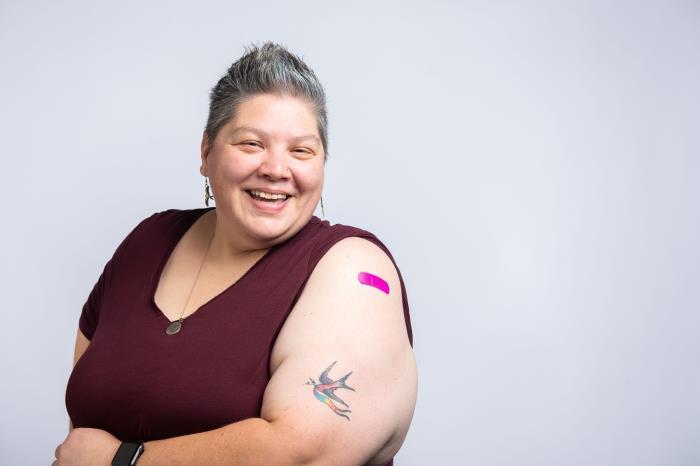
Photo: CDC / Brandon Clifton (2022), Public Health Image Library, image 26182. Public domain; available free from CDC.